How to Choose the Best Auditorium Chairs for Sale?
Choosing the right auditorium chairs for sale involves more than comparing prices and upholstery colors. A successful purchase must support comfort, safety, clear sightlines, and long-term venue performance. Theatre owners, school administrators, and event planners often discover that attractive chairs can still fail under daily use. The details matter.
A practical evaluation begins with seating dimensions, row spacing, aisle access, and floor conditions. Seat width affects comfort, especially during performances lasting several hours. High-density foam can reduce fatigue, while durable fabrics withstand repeated cleaning. Tip-up seats may improve movement and simplify maintenance. However, they can create unwanted noise if hinges are poorly designed. Test them in person when possible.
Reliable manufacturers should provide material specifications, load ratings, fire-performance documentation, warranty terms, and installation guidance. These records help buyers compare products fairly and reduce unpleasant surprises. Experience also suggests checking replacement parts before placing a large order. A damaged armrest should not require replacing an entire chair. That happens more often than expected.
The best auditorium chairs for sale should match the building, audience, and maintenance plan. A premium model is not automatically the right model. Consider children, older visitors, accessibility requirements, cleaning routines, and projected occupancy. Ask suppliers for references from comparable venues. Visit an installed project if practical. Photographs rarely reveal uncomfortable angles, narrow aisles, or difficult cleaning points. A careful decision may take longer, but it protects comfort, budget, and reputation. Even experienced buyers can overlook small installation details. Reflection is useful. The final choice should be supported by evidence, not appearance alone.
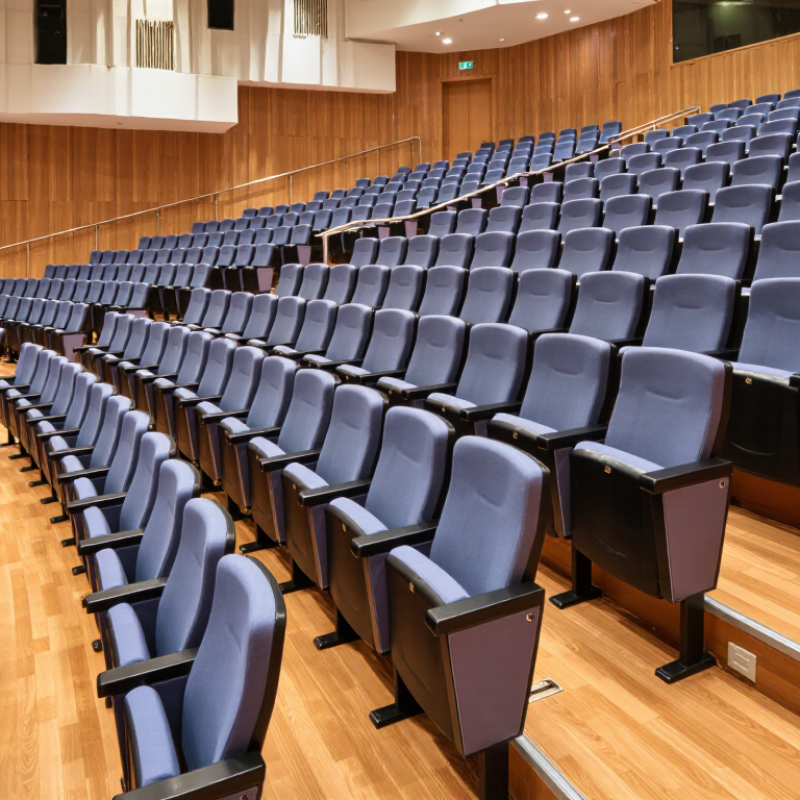
Understanding Auditorium Chair Types and Their Uses
How to Choose the Best Auditorium Chairs for Sale?
Understanding chair types is more useful than comparing colors. Fixed tip-up chairs suit theaters, cinemas, and lecture halls with permanent layouts. Their seats rise automatically, keeping aisles clear. Retractable chairs work better in multipurpose rooms. Staff can fold or remove sections for exhibitions, meetings, or community events. Telescopic seating saves floor space, but it needs accurate installation and regular maintenance.
For universities, chairs with writing tablets support note-taking and longer classes. Wider upholstered seats improve comfort during performances. However, thick cushions may hold heat and increase cleaning time. The U.S. Department of Justice’s 2010 ADA Standards require wheelchair spaces in specific quantities. For example, one space is required for every 25 seats in the first 25 seats. Check local rules before ordering. EN 12727:2016 also provides durability testing guidance for ranked seating. Ask for documented test results, not only attractive product photos. My practical mistake was focusing too much on appearance. A quiet hinge matters more.
Tips: Measure row spacing, aisle width, platform height, and cleaning access. Request a sample chair and test its noise, seat return, and tablet stability. Review fire performance documents for the intended market. A small seating plan may expose hidden problems. Leave enough access for repairs. A perfect layout on paper can still feel cramped in real use.
How to Choose the Best Auditorium Chairs for Sale?
Typical auditorium chair dimensions and their most suitable applications
Fixed-back and tip-up chairs are practical choices for cinemas, lecture halls, and standard performance venues. Tablet-arm chairs are commonly used in training rooms and educational spaces, while retractable seating is suitable for multipurpose halls that require flexible floor layouts. VIP or reclining chairs generally require more width and row pitch for improved comfort.
The dimensions shown are typical planning values in centimeters. Actual specifications vary by manufacturer, accessibility requirements, fire regulations, and local building codes.
Evaluating Seating Capacity, Layout, and Space Requirements
How to Choose the Best Auditorium Chairs for Sale?
Seating capacity should begin with accurate room measurements, not a supplier’s maximum estimate. Record the usable floor area, stage position, entrances, columns, and technical equipment. Then test several layouts on paper before ordering. A simple scaled drawing can reveal wasted corners and uncomfortable crowding. It also helps compare straight rows, curved rows, and staggered seating. Curved layouts may improve sightlines, but they can reduce total capacity. Every seat needs a clear view of the stage. Poor viewing angles quickly become a comfort problem.
Leave enough space for aisles, leg movement, cleaning, and emergency access. Local building and accessibility requirements should guide aisle widths, wheelchair positions, handrails, and exit routes. These requirements vary by location, so verify them with a qualified professional or local authority. Do not treat accessible spaces as leftover areas. They should offer comparable sightlines and convenient access. Chair spacing also matters. Narrow rows may fit more seats, but they often create awkward movement during busy events.
In practical projects, the first capacity estimate is rarely perfect. I have seen plans lose several seats after doors, lighting controls, and equipment cabinets were measured properly. That is not a failure. It is useful correction. Mark a full-size sample row with tape, then walk through it while carrying a bag. Small problems become obvious. Consider chair width, row depth, seat clearance, and maintenance access together. A room that holds fewer seats may serve audiences better and remain easier to manage over time.
Assessing Prices, Installation, and Supplier Reliability
How to Choose the Best Auditorium Chairs for Sale?
Assessing Prices, Installation, and Supplier Reliability
Price should reflect more than the chair itself. Compare upholstery, seat mechanisms, writing tablets, shipping, and replacement parts. A low quotation may exclude installation or stair delivery. Ask for a complete, itemized proposal before approving the purchase.
Installation can affect comfort and safety. Measure row spacing, aisle width, floor levels, and door access carefully. Experienced installers should provide a layout drawing and explain anchor points. During a recent venue assessment, we found that a few centimeters of misalignment created visible gaps between rows. It was fixable, but expensive. Do not assume the first plan is perfect.
Tips: Request a physical sample. Test the seat return speed. Check fabric seams and armrest stability. Ask for installation references from similar auditoriums. A reliable supplier should state delivery dates, warranty terms, inspection procedures, and response times in writing. Speak with previous customers when possible. Good promises are not enough.
Consider long-term maintenance before choosing the cheapest option. Ask whether damaged hinges, cushions, or brackets can be replaced individually. Review the supplier’s technical drawings and product tolerances with your contractor. Clear documentation shows professional control. It also exposes weaknesses early. Some suppliers answer quickly but provide vague details; that is a warning sign.