How to Choose the Right Electric Forklift Battery for Your Needs?
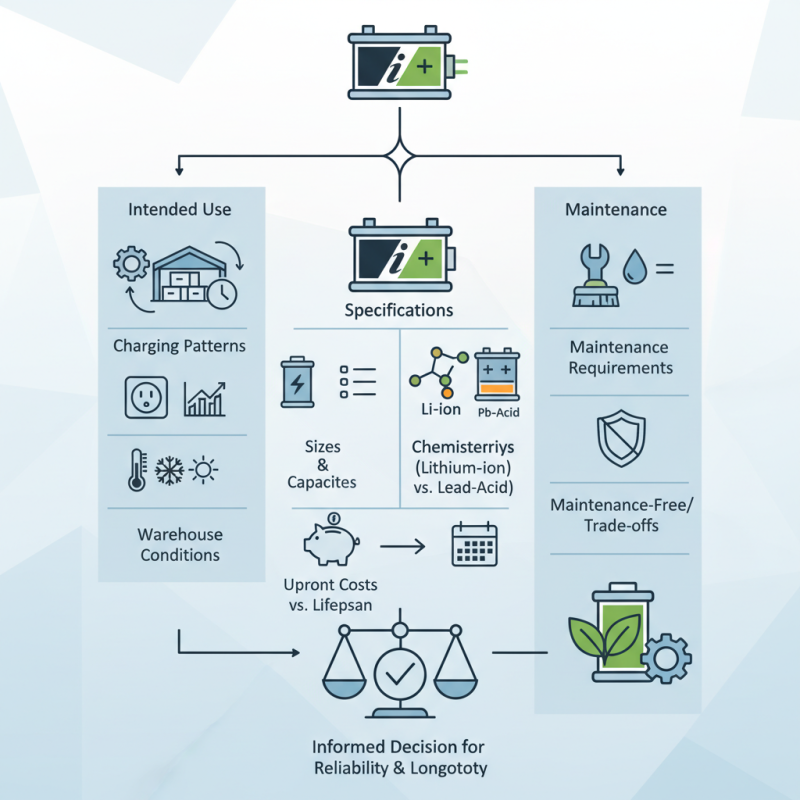
Choosing the right Electric Forklift Battery can significantly impact your operational efficiency. These batteries power forklifts, enabling seamless movement of goods. Selecting the ideal battery isn’t always straightforward. It depends on various factors, such as the intended use, charging patterns, and specific warehouse conditions.
Understanding the specifications of Electric Forklift Batteries is crucial. Their sizes, capacities, and chemistries vary widely. For instance, lithium-ion batteries offer fast charging and longer life compared to lead-acid alternatives. However, they may have higher upfront costs. Evaluating your operational needs helps gauge which option suits you best.
Moreover, the battery's maintenance requirements shouldn't be overlooked. Some batteries require regular watering and equalization. Others are more maintenance-free but come with potential trade-offs. Careful consideration is essential to ensure reliability and longevity. By taking these factors into account, you can make an informed decision that meets your unique needs.
Understanding Different Types of Electric Forklift Batteries
Choosing the right electric forklift battery requires understanding the different types available. The most common types include lead-acid, lithium-ion, and nickel cadmium. Each type has unique features suited for various applications. For example, lead-acid batteries are well-known for their affordability but require regular maintenance. In contrast, lithium-ion batteries cost more but offer longer life cycles and faster charging times.
When considering battery options, think about your specific operational needs. Evaluate how often the forklift will be used and for what duration. If your operations are intensive, a lithium-ion battery may save you time and money in the long term. However, if your needs are temporary or infrequent, a lead-acid battery could suffice.
Tips for choosing batteries include considering the maintenance requirements. Some batteries require daily water top-ups, while others have minimal upkeep. Additionally, verify the voltage and capacity specifications to ensure they match your equipment. It is essential to think critically about your choices. Sometimes, the initial savings can lead to higher costs later. Always weigh the pros and cons of each battery type based on your operational demands and budget constraints.
Evaluating Your Forklift's Power Requirements
When evaluating your forklift's power requirements, consider how often you use the machine. If it's in constant operation, a high-capacity battery is necessary. It ensures that the forklift performs efficiently without interruptions. Think about the kind of tasks you undertake. Heavy loads demand more power, affecting battery choice directly.
Battery size and type also matter. An undersized battery may lead to performance issues, while an oversized battery may be unnecessarily expensive. Assessing the lifting cycles throughout your workday can help determine the right fit. Consider the environmental conditions as well. Extreme temperatures can impact battery performance and lifespan. Reflect on these factors before making a decision.
Finally, evaluate the maintenance needs. Some batteries require more upkeep than others. Think about your operational limits and workforce skills. It’s critical to find a balance between power, cost, and ease of maintenance. Mistakes can be costly, so taking time for evaluation is key. A thoughtful approach leads to better long-term results.
Considering Battery Capacity and Runtime Needs
When choosing an electric forklift battery, understanding battery capacity and runtime needs is essential. Battery capacity is measured in amp-hours (Ah). This figure indicates how much energy the battery can store and subsequently deliver. For instance, a common forklift battery ranges between 600 Ah to 900 Ah. A higher amp-hour rating provides extended usage time, which is crucial in settings with heavy loads and prolonged operation.
Runtime demands vary based on operational intensity. For example, a busy warehouse may require a battery that lasts 8 hours or more. Reports indicate that electric forklifts perform optimally when the battery can sustain continuous usage for the entire shift. Keep in mind that factors such as load weight and environmental conditions significantly impact performance. Overloading a forklift can reduce battery life and runtime, leading to inefficiencies.
Tips: Assess your daily operations to determine which amp-hour rating meets your runtime needs. Calculate the average hours you expect to operate the forklift under different loads. Remember, a commitment to regular maintenance can enhance battery life and ensure optimal performance over time. A neglected battery can lead to reduced efficiency and increased operational costs.
Assessing Charging Options and Maintenance Requirements
When selecting the right electric forklift battery, understanding charging options is essential. Different batteries have varying charging requirements. For instance, lead-acid batteries usually require long charging cycles, needing around 8 hours for a full charge. In contrast, lithium-ion batteries can charge much faster, often in just 2 to 3 hours. This can significantly impact your operational efficiency.
Maintenance requirements also vary widely. Lead-acid batteries need regular water checks and equalization charges. Ignoring these can lead to reduced performance and lifespan. On the other hand, lithium-ion batteries generally require less maintenance. They have a built-in battery management system that monitors health and performance. This means less manual intervention but still needs regular inspections to ensure safety and efficiency.
Evaluating your work environment is crucial. Consider factors like use frequency and duration. Higher usage means more frequent charging, which might favor faster-charging batteries. Think about how easy it is to charge batteries in your specific location as well. Reflecting on these points early in the decision-making process can save you headaches later.
Electric Forklift Battery Types and Their Performance
This chart compares the maximum discharge rates of different electric forklift battery types. Understanding these ratings can help you choose the right battery based on your specific operational requirements and maintenance considerations.
Budgeting and Cost Considerations for Battery Selection
When selecting the right electric forklift battery, budgeting is crucial. Initially, consider the battery’s upfront cost. Lithium-ion models can be more expensive but offer longer lifespans and lower maintenance. Lead-acid options are typically cheaper but require frequent replacement. Calculate your total ownership cost over time to make an informed choice.
Operational costs also play a significant role. Charging infrastructure can add expense, especially with older systems that need updates. Think about the frequency of battery charging required for your operation. A higher turnover rate means you might need multiple batteries. Reflect on your work demands; heavier lifting may require a more robust battery, impacting costs.
Don’t overlook potential training costs. Understanding battery management can significantly improve lifespan and efficiency. Mismanagement leads to early replacements, which complicates budgeting. Invest time in researching best practices and consider the added expenses of workforce training. Balancing these factors will lead to a more reliable battery selection tailored to your operational needs.