

Choosing an Off Grid Solar System is less about buying the largest panels and more about matching equipment to daily life. A refrigerator cycling overnight, a well pump starting at dawn, and several cloudy days can shape the design more than a sunny afternoon. Start by listing essential loads, their running times, and any brief startup surges. Then estimate seasonal sunlight and decide how much backup time matters. Small numbers can mislead.
Energy-efficiency expert Amory Lovins is often quoted as saying, “The cheapest energy is the energy you don’t use.” That principle matters off grid: reducing avoidable loads may lower the required panel, battery, and inverter capacity. Compare battery chemistry, usable storage, inverter surge rating, charge-controller limits, warranties, and options for future expansion. Ask a qualified solar professional to check the calculations against local conditions and the equipment manuals. A spreadsheet helps, but it does not know whether the pump runs longer in winter.
The best system is the one that reliably serves your real needs, not an impressive specification sheet. Consider what happens after two gray days. Can you reduce consumption, add a generator, or expand storage later? There is no perfect estimate. Review your assumptions before purchase, and leave room for uncertainty. That extra check may feel tedious. It is worth doing.
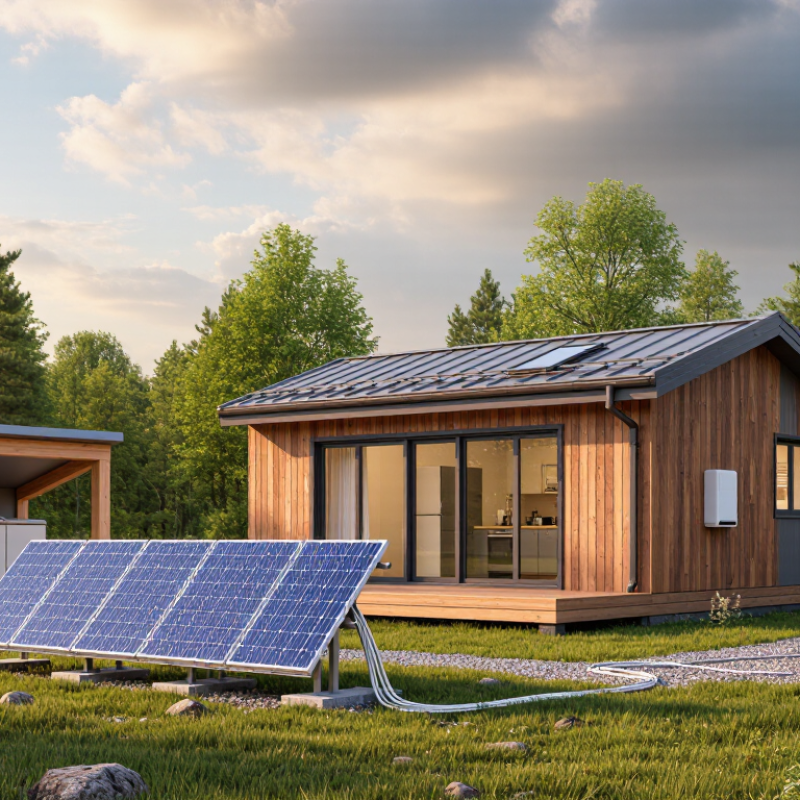
Start with a simple load list. Record each appliance’s watts and estimated hours of use per day. A 60-watt fridge running for 10 hours uses about 600 watt-hours, though its compressor cycles on and off. Check actual energy use when possible; label ratings are only estimates. Small loads add up. Include lights, device chargers, water pumps, and inverter standby consumption.
Then identify which appliances may run at the same time. Add their running watts to estimate continuous power demand. Motors in pumps and refrigerators can briefly draw much more power when starting. That surge matters. Check both the inverter’s continuous rating and its short-term surge rating against your largest likely startup load. A system can have enough daily energy yet still trip when two demanding appliances overlap.
Use your daily watt-hour total to guide battery and solar-panel sizing, allowing for conversion losses and weaker winter sunlight. Consider how many cloudy days you want the battery to cover. I would not treat one week of measurements as a perfect forecast; routines change, and occasional tools are easy to forget. Track usage across different weather and workdays. A plug-in energy meter can reveal surprises, especially from devices left running overnight.
Choosing an off-grid solar system starts with observing your site, not guessing from its annual sunshine average. Watch the proposed panel area in the morning, at noon, and late afternoon. A nearby tree can cast a narrow shadow that cuts output more than expected. Repeat the check in different seasons, because the sun’s path changes. Clouds matter. A simple shade log is useful, though it will not capture every weather pattern.
Climate affects both production and equipment. Short winter days may limit charging when heating or lighting needs rise. Hot panels can produce less power, while snow can cover them and delay generation. Include several low-sun days in your planning, and consider how much battery storage your essential loads require. A rough estimate can still be wrong; real household use often varies from week to week. Track actual consumption before choosing system capacity.
Measure twice. Available space must fit the panels, mounting hardware, and safe access for cleaning or repairs. Check whether trees, roof features, or future construction could block sunlight. Ground-mounted panels offer easier access, but need clear, stable space and protection from accidental damage. Roofs can save land, yet their angle and condition may limit placement. Leave room for ventilation around batteries and other equipment, and ask a qualified installer to assess structural and electrical requirements. A compact layout may look efficient on paper but leave too little room for maintenance.
Choosing an off-grid system begins with a realistic daily energy estimate. List each appliance, its wattage, and hours of use, then add the watt-hours. A refrigerator may cycle on and off, so its label rating alone can mislead. Measure actual use when possible. Estimates can be wrong.
For example, a home using 1,200 watt-hours daily, with four peak-sun hours and 75 percent system efficiency, needs about 400 watts of panels before adding a weather margin. A 500–600-watt array gives more breathing room, though winter sunlight may require extra capacity. Size the battery for the days of backup you need. Two days of that example load equals 2,400 usable watt-hours; at 80 percent usable capacity, choose roughly 3,000 watt-hours nominal. Check the battery maker’s specified limits.
The inverter must handle the appliances running together, not just their average use. Add their continuous wattage, then check the startup surge for pumps, compressors, or power tools. Surges matter. A small inverter may trip when a refrigerator starts beside a kettle. Keep essential loads separate in your calculations, and review them after tracking real usage for a few weeks. That adjustment is easy to overlook.
An off-grid solar system should match the way you use power, not just the number of panels on a roof. A small cabin with lights and a refrigerator may suit a simpler system than a home with a well pump, workshop tools, and electric cooking. Stand-alone systems rely on stored energy, while systems with a backup generator can cover longer stretches of cloudy weather. Estimate daily energy use and peak loads before comparing designs. That estimate is rarely perfect.
Component quality matters because each part affects reliability. Check the inverter’s continuous output and surge rating; a pump or compressor may briefly draw much more power when starting. Review the battery’s usable capacity, temperature limits, and expected cycle life, rather than comparing capacity alone. A charge controller must also match the panel arrangement and battery voltage. Ask for clear specifications and compatible wiring diagrams. Check the manual.
Plan for expansion before buying. Confirm whether the inverter supports additional capacity, whether batteries can be added later, and how many panels the controller can handle. Matching voltage and battery chemistry is essential; adding a second battery is not always as simple as connecting two cables. Leave physical space for extra equipment, and allow room in the budget for protection devices and professional installation where needed. I would avoid sizing everything to the last watt. It can look efficient on paper, but real usage changes.
| System Type | Typical Application | Typical System Range | Battery and Voltage | Component Quality Checks | Expandability | Main Advantages | Key Trade-Offs |
|---|---|---|---|---|---|---|---|
| Portable DC system | Camping, small sheds, emergency lighting, and charging phones or other small devices. | About 100–800 W of solar; commonly paired with a portable power station or small charge controller. | Usually an integrated battery, often lithium iron phosphate (LFP) or lithium-ion. Many units provide 12 V DC outputs and an AC inverter. | Check usable battery capacity, continuous and surge inverter ratings, charge-controller limits, connector compatibility, and safe battery protection features. | Low to moderate. Additional panels may be possible, but input-voltage and input-current limits can restrict upgrades. | Easy to transport, install, and use; minimal wiring for basic loads. | Limited energy storage and output; not generally suited to large appliances or long periods of cloudy weather. |
| Small 12 V or 24 V cabin system | Cabins, workshops, small pumps, lighting, refrigeration, and modest daily energy use. | Often around 0.5–3 kW of solar, depending on location, season, and energy demand. | 12 V is common for very small systems; 24 V can reduce current and cable size as system power increases. LFP batteries are a common option. | Look for a correctly sized MPPT charge controller, appropriately rated DC breakers and fuses, suitably sized cables, and a battery with documented operating limits. | Moderate. Expansion is possible if the controller, inverter, battery bank, and wiring are designed for additional capacity. | Can be cost-effective for essential loads and relatively simple to maintain. | Higher DC current at lower voltage can require thicker cables. Limited inverter capacity may constrain simultaneous appliance use. |
| 48 V off-grid home system | Full-time or seasonal homes with several household circuits and higher daily energy use. | Commonly around 3–12 kW of solar, with final sizing based on measured loads and local solar conditions. | Typically a 48 V nominal battery bank, often built from compatible LFP battery modules. The inverter supplies household AC power. | Check inverter continuous and surge ratings, battery discharge limits, charge-controller capacity, monitoring functions, protection devices, and compatibility between battery and inverter. | Good when planned in advance. Choose equipment that supports additional battery capacity, PV input, or parallel inverter operation within stated limits. | Lower DC current than comparable low-voltage systems; better suited to larger loads and longer cable runs. | Higher upfront cost and more complex design. High-power appliances may require careful load management. |
| Modular hybrid off-grid system | Homes or remote sites that need solar and batteries while retaining a generator or another backup source. | System size varies widely; solar, storage, and backup capacity should be selected to match daily energy use and peak loads. | Often uses a 48 V battery bank or a compatible high-voltage battery architecture, depending on the inverter system. | Verify approved battery compatibility, generator input limits, transfer and charging functions, system monitoring, and the available protection and isolation equipment. | Potentially high if the inverter supports additional PV, batteries, or parallel units. Confirm the manufacturer’s stated limits before purchase. | Backup generation can help cover extended low-solar periods; modular equipment can support staged installation. | More equipment and configuration choices can increase design complexity. A generator still requires fuel and maintenance. |
Selection note: These ranges are illustrative, not sizing recommendations. Estimate daily energy use in kWh, identify peak and surge loads, and account for local sunlight, seasonal variation, installation conditions, and required backup days before choosing equipment. Have system protection, wiring, and installation designed to meet applicable electrical codes.
Choosing an off-grid solar system starts with a careful site check. Record daily energy use, then note high-surge loads such as pumps, refrigerators, and power tools. Shade changes through the year, so inspect the roof or ground array in different seasons. Confirm the mounting surface, cable routes, equipment clearances, and access for repairs before installation. A battery sized only for average use may disappoint during several cloudy days. Leave room for that reality.
Safety depends on sound installation, not just good components. Use properly rated overcurrent protection, grounding, disconnects, and weather-sealed enclosures. Keep batteries within their specified temperature range, away from standing water, and accessible for inspection. Follow equipment instructions and applicable local electrical and fire requirements; a qualified installer can verify conductor sizing and protection. Keep clear access. A neat cable run helps, but it does not replace testing.
Plan maintenance before the first outage. Check terminals for corrosion, inspect cables for abrasion, clear leaves from panels, and review battery alarms and charge records. NREL’s 2012 review of nearly 2,000 photovoltaic degradation observations found a median decline of about 0.5% per year. That is a fleet-level finding, not a promise for every installation. Track output against your own baseline; dust, shade, loose connections, or aging batteries can change performance. I would still schedule checks after severe weather, even when the system seems fine.
Common nominal battery-bank voltages used in off-grid solar systems
12V, 24V, and 48V are common battery-bank configurations. For the same power, a higher voltage means lower current, which can reduce cable size requirements. Choose a voltage compatible with your inverter, batteries, loads, and installation; follow electrical codes and consult a qualified installer.
Our Off-grid experts will come back with recommendations

Stay up to date with Leading Edge innovations and offers by joining our mailing list. Occassionally we send informative newsletters, offers and promotions that we think you'll find useful or interesting.